
 Join the IQOS user group
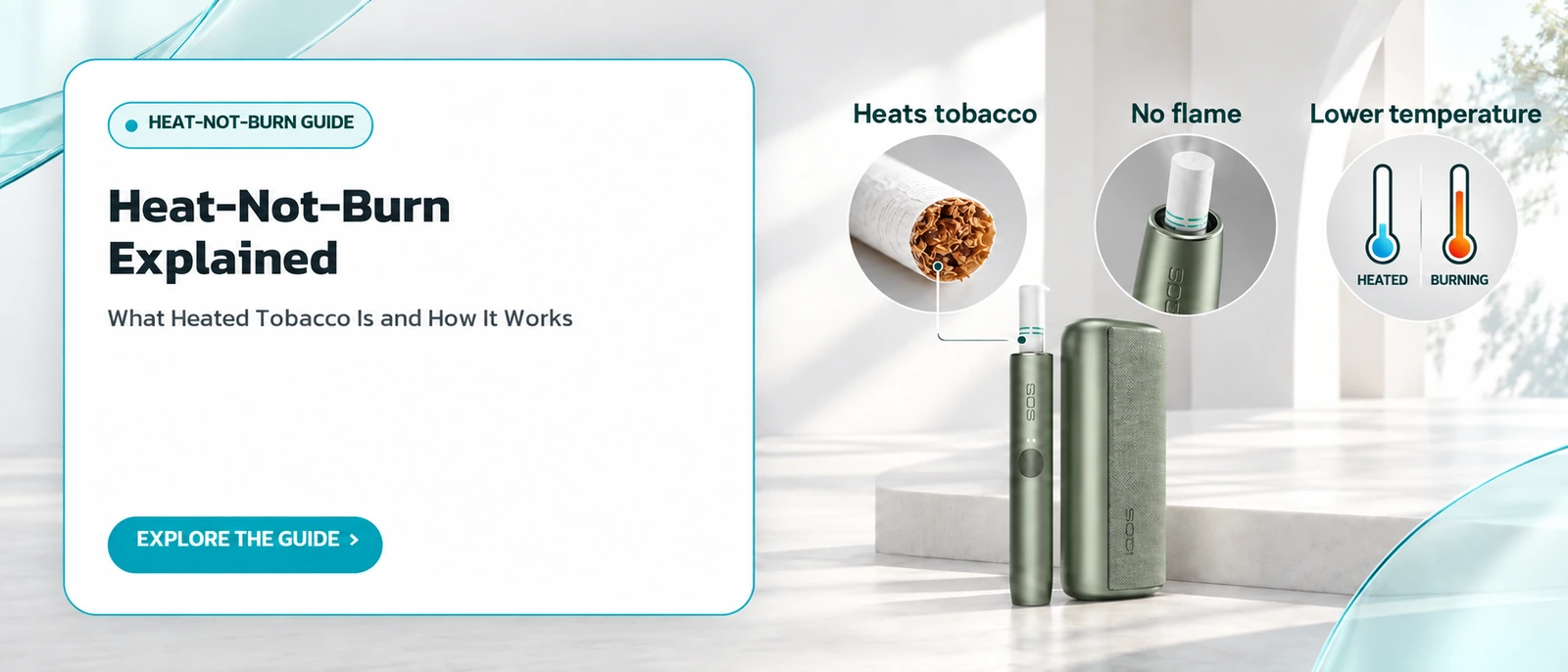
What does the phrase heat-not-burn actually mean?
It describes products that heat tobacco enough to release an aerosol containing nicotine, but without a flame or combustion. Manufacturers and the World Health Organization use the formal name heated tobacco products. In Thailand the everyday label is smokeless cigarettes, and people also search for hybrid cigarettes or smokeless smoking devices, yet all of these words point to the same group of products.
Smokeless is a description of what people notice, not a technical label, so our introduction to IQOS sticks to the phrase heated tobacco throughout.
You will also see the short form HNB in English news reports and forum threads. It simply abbreviates heat-not-burn and does not refer to any single brand.
How is heating tobacco mechanically different from burning it?
A cigarette has to be lit so the tobacco combusts and makes smoke. A heated tobacco device instead uses a battery to power a heating part that touches the stick or sits inside it, keeping the temperature below the point of combustion. The WHO gives roughly 350 degrees Celsius for this category, compared with about 600 degrees for a burning cigarette.
That is a difference in mechanism only. It says nothing about effects on the body, and this site does not compare products on health grounds.
Within IQOS there are two heating methods, a blade and induction, depending on the device family. Our IQOS model comparison sets them side by side.
Where does heated tobacco differ from an e-cigarette or pod?
An e-cigarette or pod uses a coil to heat a nicotine liquid until it becomes vapour, and there is no tobacco leaf in the system at all. Heated tobacco uses a stick filled with real processed tobacco, and the device heats that tobacco directly. Both run on batteries, but they are different product types built around different materials.
The confusion comes from the shared features: no flame and a rechargeable battery. The material being heated is the real dividing line, liquid on one side and tobacco sticks such as TEREA on the other.
Thai law, however, groups both under the same prohibition, as the last section explains.
What kind of heat-not-burn product is IQOS?
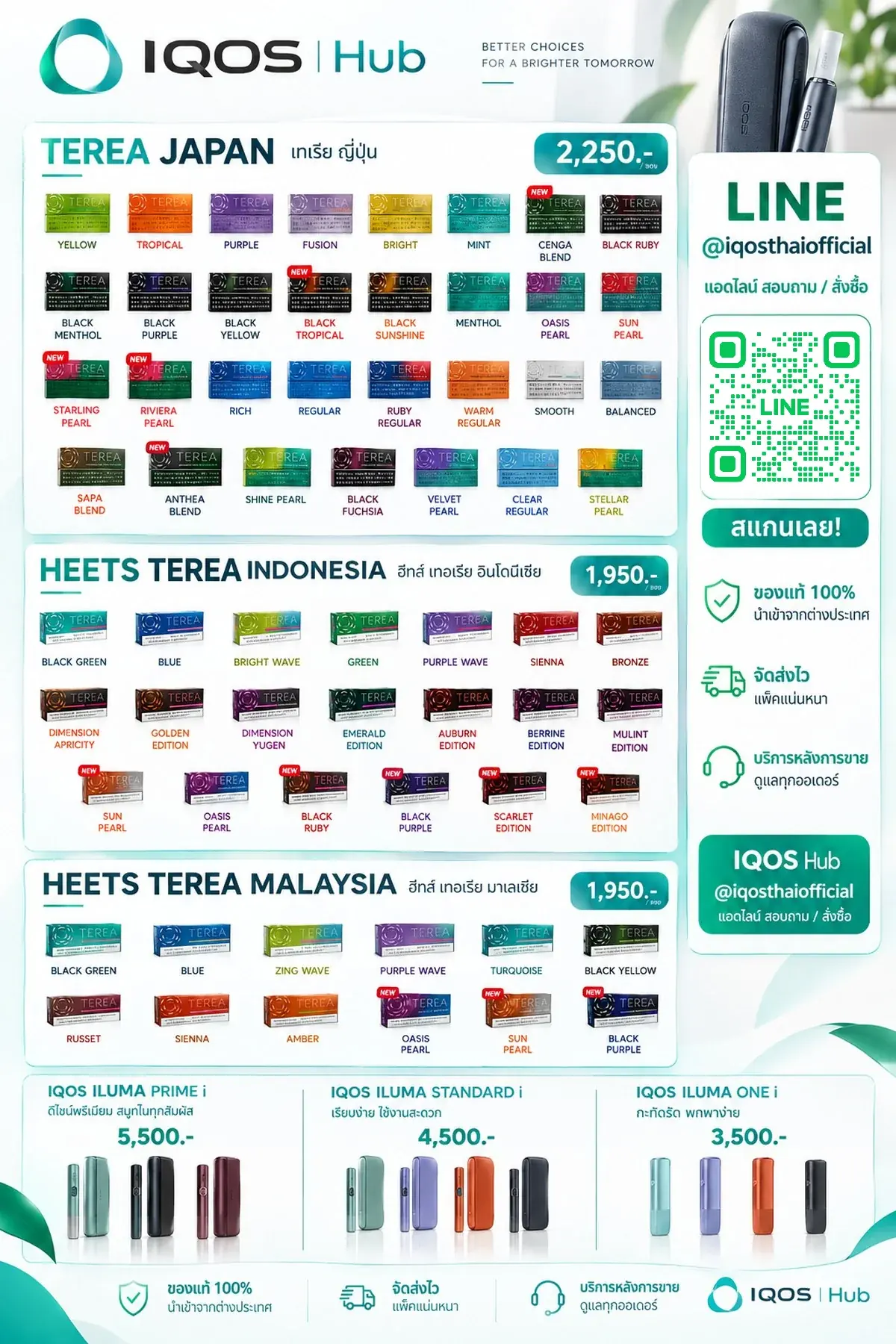
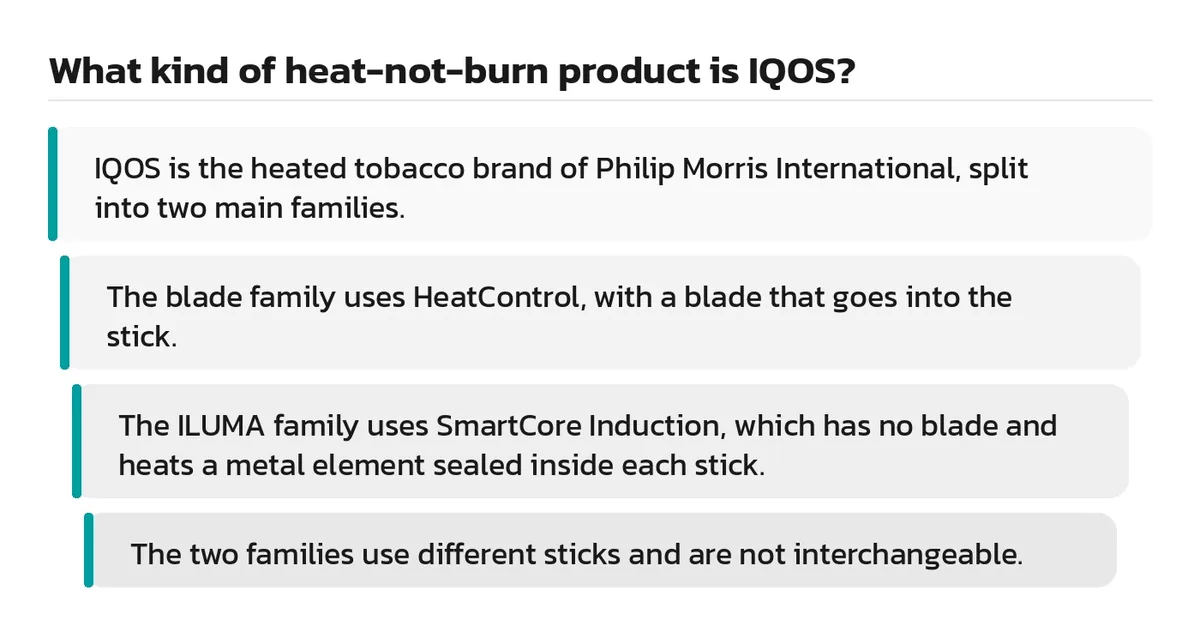
IQOS is the heated tobacco brand of Philip Morris International, split into two main families. The blade family uses HeatControl, with a blade that goes into the stick. The ILUMA family uses SmartCore Induction, which has no blade and heats a metal element sealed inside each stick. The two families use different sticks and are not interchangeable.
The blade family includes IQOS 3 DUO, later renamed ORIGINALS in some countries; see our IQOS 3 DUO page.
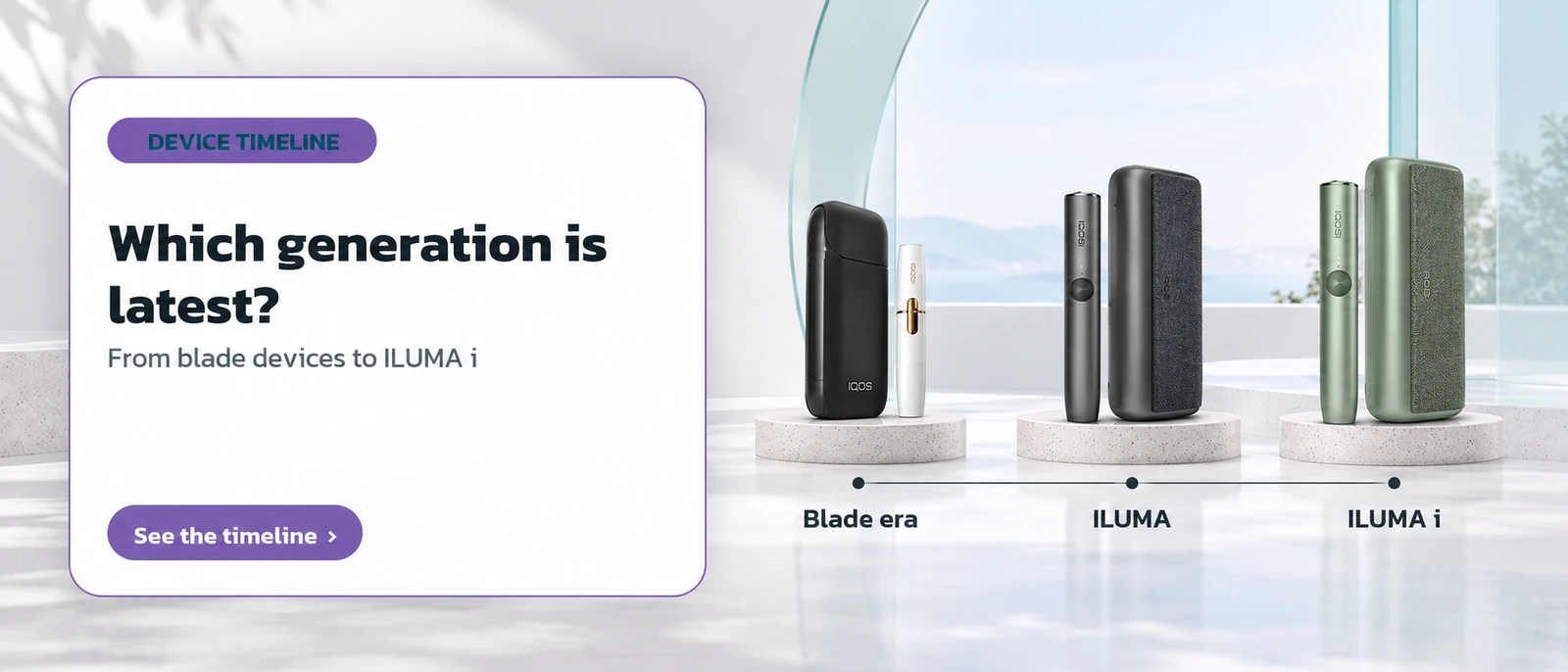
The induction side covers ILUMA PRIME, ILUMA ONE and the second generation led by ILUMA i. A dated overview of every family is on the latest IQOS devices.
Which other heated tobacco brands exist besides IQOS?
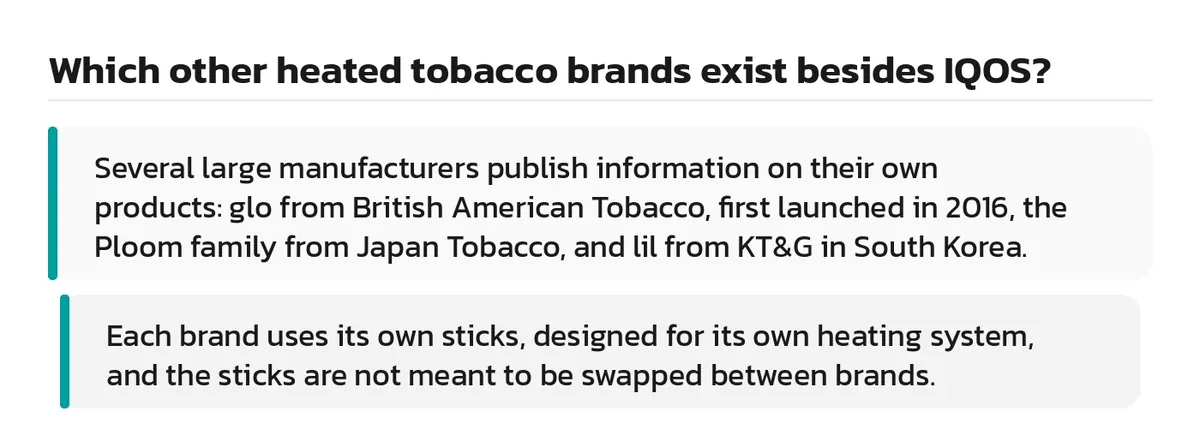
Several large manufacturers publish information on their own products: glo from British American Tobacco, first launched in 2016, the Ploom family from Japan Tobacco, and lil from KT&G in South Korea. Each brand uses its own sticks, designed for its own heating system, and the sticks are not meant to be swapped between brands.
Knowing the maker clears up a common mix-up: IQOS in Japan belongs to Philip Morris, not to Japan Tobacco, which has Ploom.
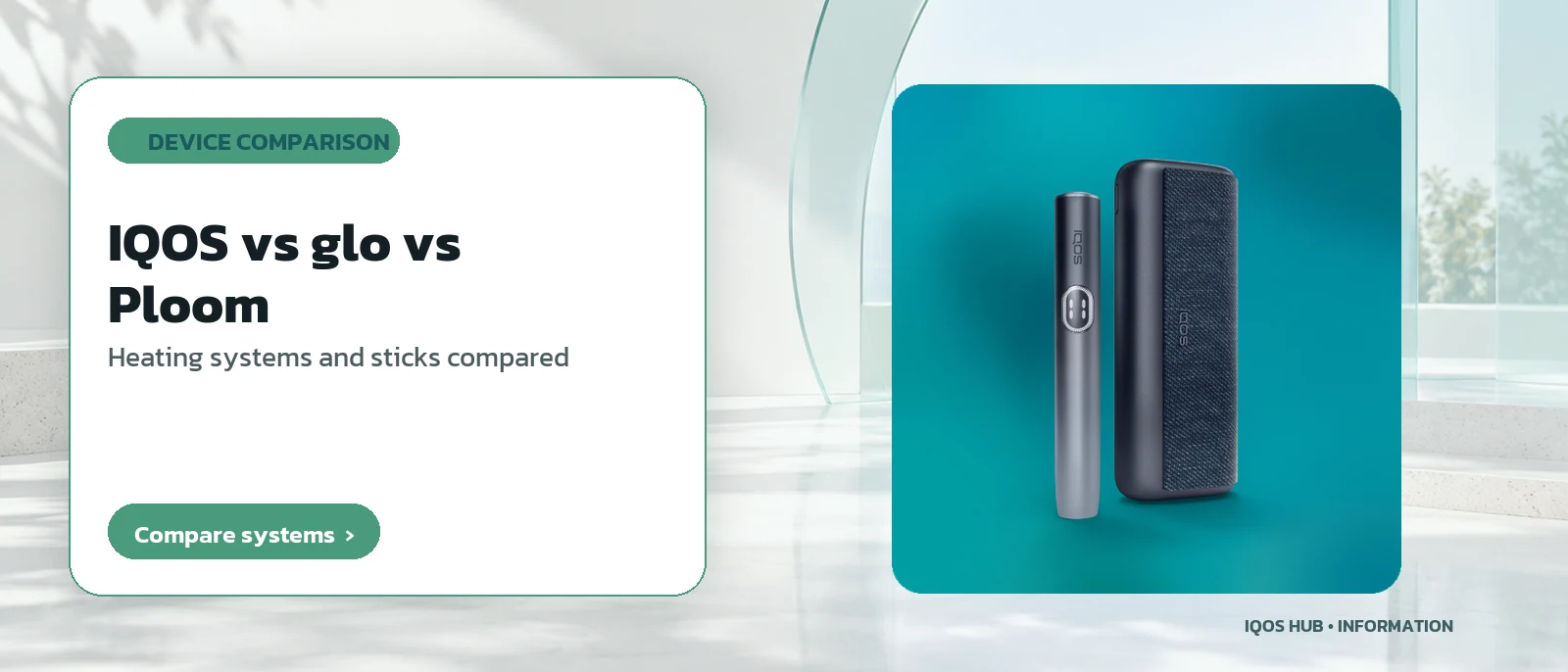
We focus on IQOS and mention the others only to show the wider category. A technical side-by-side is on IQOS, glo and Ploom compared.
How does the WHO classify heated tobacco?
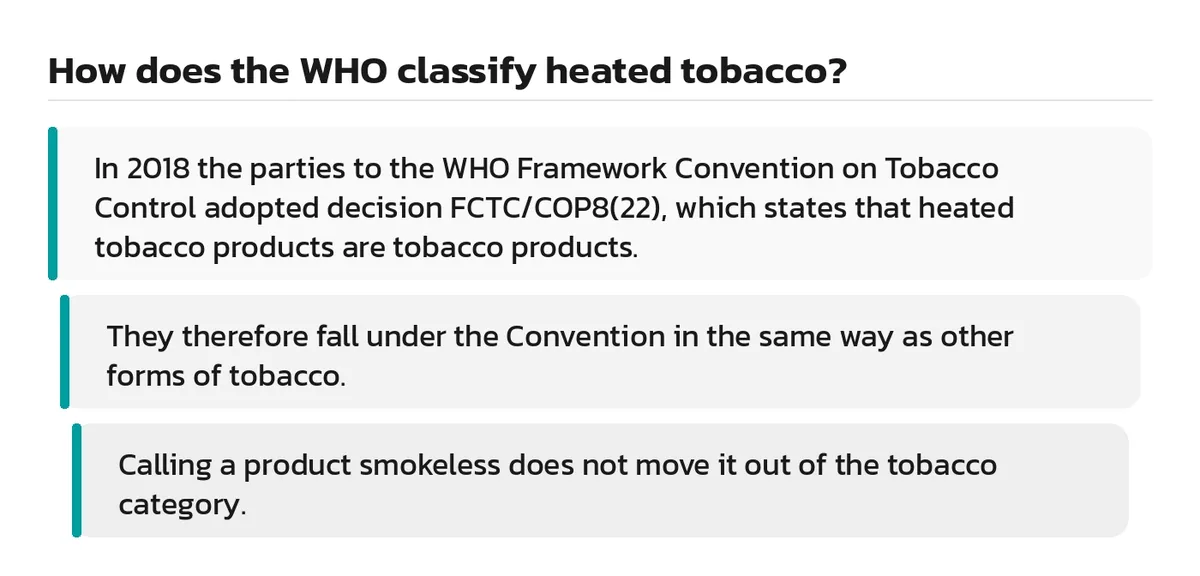
In 2018 the parties to the WHO Framework Convention on Tobacco Control adopted decision FCTC/COP8(22), which states that heated tobacco products are tobacco products. They therefore fall under the Convention in the same way as other forms of tobacco. Calling a product smokeless does not move it out of the tobacco category.
Governments then turn that principle into national law in different ways. Some countries allow the products under regulation, while others ban them outright.
For examples by destination, see IQOS rules abroad. The WHO documents are linked in the sources below.
The 2018 decision was adopted at the eighth session of the Conference of the Parties, which is what COP8 in its reference stands for.
Does smokeless mean nothing comes out at all?
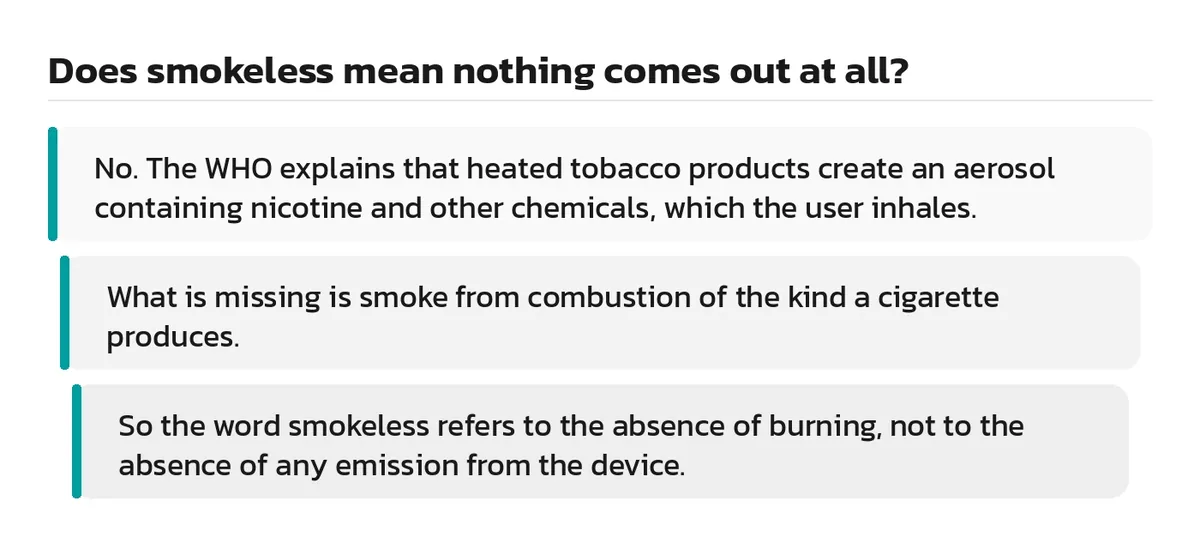
No. The WHO explains that heated tobacco products create an aerosol containing nicotine and other chemicals, which the user inhales. What is missing is smoke from combustion of the kind a cigarette produces. So the word smokeless refers to the absence of burning, not to the absence of any emission from the device.
This misunderstanding leads some people to assume the devices can be used anywhere. Airline rules and many national laws treat their use like smoking, as covered in flying with IQOS.
Every product mentioned here contains nicotine, which is an addictive substance.
The WHO information sheet listed in the sources describes this aerosol in more detail.
Where does heated tobacco stand under Thai law?
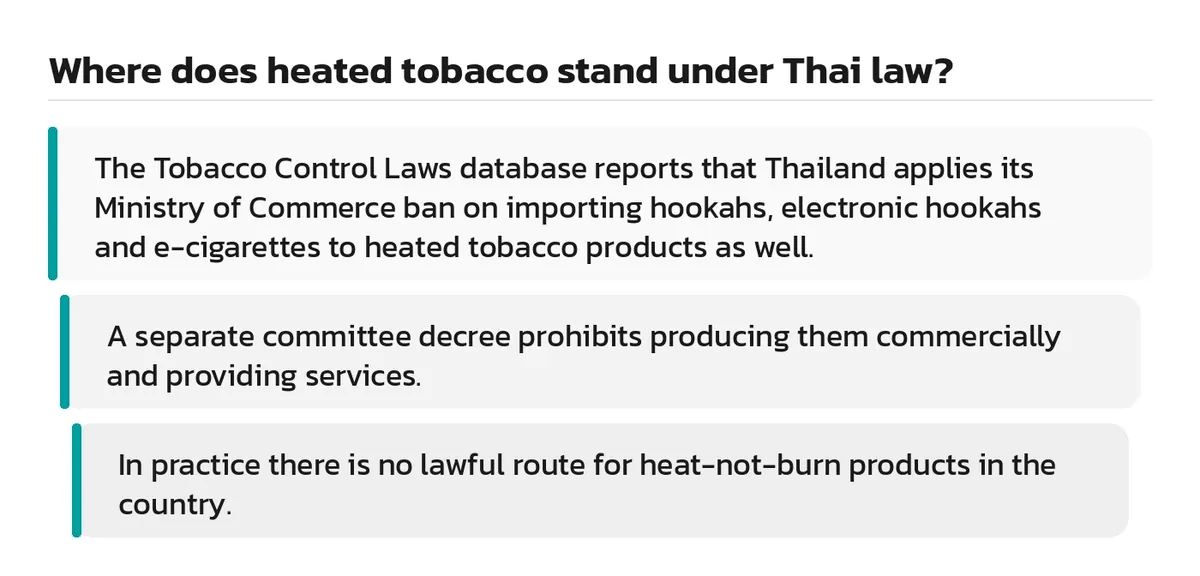
The Tobacco Control Laws database reports that Thailand applies its Ministry of Commerce ban on importing hookahs, electronic hookahs and e-cigarettes to heated tobacco products as well. A separate committee decree prohibits producing them commercially and providing services. In practice there is no lawful route for heat-not-burn products in the country.
Official travel advice from the UK adds that possessing or using these devices is illegal. Statute details and penalties are set out in is IQOS legal in Thailand.
This page is general information and not legal advice for any individual case.
The same rules apply whatever the brand, from IQOS to glo or Ploom.
| Topic | Cigarette | Heat-not-burn | E-cigarette or pod |
|---|---|---|---|
| Material heated | Tobacco leaf | Tobacco in a stick | Liquid |
| Heating method | Lit and burned | Battery, controlled temperature | Heating coil |
| Temperature cited by WHO | About 600 C | About 350 C | — |
| What comes out | Smoke | Nicotine aerosol | Vapour from liquid |
| Status under FCTC decision | Tobacco product | Tobacco product | Regulated separately by country |
Frequently asked questions
Are smokeless cigarettes and hybrid cigarettes the same thing?
What does HNB stand for?
Can a heated tobacco device take ordinary cigarettes?
Does heated tobacco contain nicotine?
How is heated tobacco different from oral tobacco pouches?
Is IQOS an e-cigarette?
Sources
- Heated tobacco products information sheet — World Health Organization
- WHO FCTC decision FCTC/COP8(22) on novel and emerging tobacco products
- Heated tobacco products — Philip Morris International
- glo — British American Tobacco
- Ploom X — Japan Tobacco
- lil SOLID — KT&G
- Thailand — Heated tobacco products regulatory framework (Tobacco Control Laws)
Read more
← Back to the Legal section · Back to the homepage
Join the IQOS User Group (Thai-language LINE group)
A space for IQOS users to exchange information with each other — not a commercial channel of any kind. For readers aged 20+ only. Note: this is a Thai-language LINE group.
Join the IQOS User Group (Thai-language LINE group)